
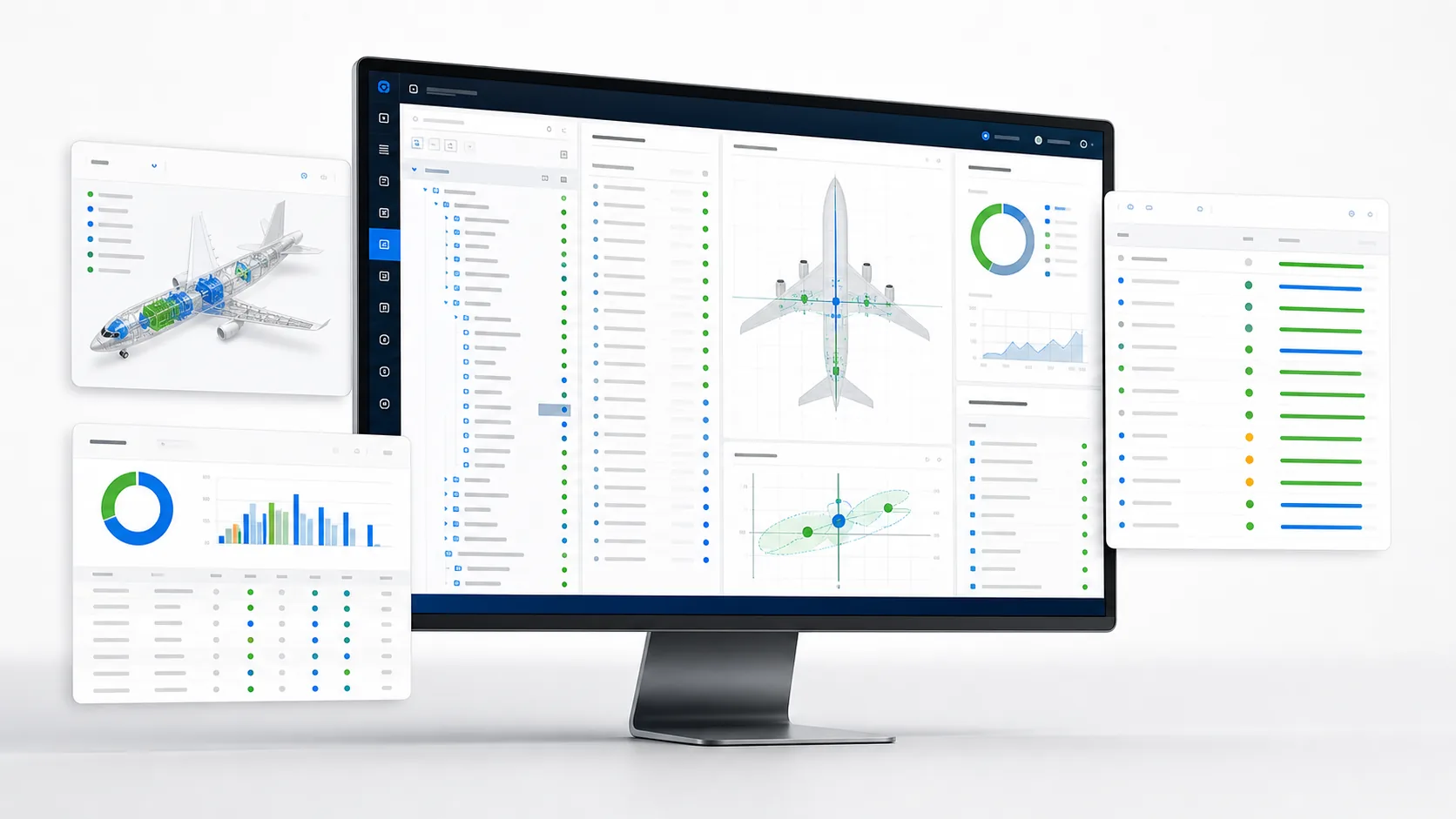
MassMaster
Mass Properties Control at Engineering Level
Organize component, subsystem, and vehicle-level mass data with clear sources, assumptions, configuration context, and review-ready rollups.
View MassMasterMerchuian Solutions develops MassMaster and MassMaster Nexus for controlled mass properties tracking, weight distribution management, and engineering visibility, plus custom software for Aerospace, UAV, General and Commercial Aviation programs.
Merchuian Solutions is an aerospace software company focused on productized mass properties management and purpose-built engineering software for Indian aerospace programs.
MassMaster creates the structured engineering record. MassMaster Nexus extends that record across teams, suppliers, configurations, and program reviews.
Organize component, subsystem, and vehicle-level mass data with clear sources, assumptions, configuration context, and review-ready rollups.
View MassMaster
 MassMaster Nexus
Scale mass properties workflows with supplier inputs, configuration-aware summaries, program dashboards, and governed collaboration.
View MassMaster NexusEvery page, proof point, and call to action supports one of these two offers.
Aerospace mass properties software for weight tracking, weight distribution, configuration visibility, engineering efficiency, and evidence preparation.
Explore ProductsCustom engineering software built exclusively for Aerospace, UAV, and aviation analysis, data and program workflows.
View CapabilitiesThe message changes by program environment while the product and engineering foundation stays consistent.
Controlled engineering data, configuration baselines, supplier coordination, and traceable evidence for complex aircraft programs.
Mass budgets, subsystem rollups, growth tracking, center-of-gravity visibility, and program-level engineering reviews.
Weight management and engineering software for aircraft development, modifications, MRO inputs, and long-life configuration control.
Show buyers how productized mass properties management reduces reconciliation, improves change visibility, and creates a more dependable basis for engineering decisions.
Maintain a consistent hierarchy from component to complete vehicle.
Connect mass changes to the applicable design and program baseline.
Evaluate how design inputs affect balance and program limits.
Prepare traceable summaries for internal, customer, and regulatory review.
Visible, specific answers make the site easier to evaluate and easier for search and AI systems to cite accurately.
Aerospace mass properties software is a controlled system for organizing, analyzing, and reporting component, subsystem, and vehicle-level mass data, including weight distribution, configuration context, assumptions, and engineering history.
MassMaster is positioned as the core engineering environment for mass properties records and analysis. MassMaster Nexus is positioned as the program-scale layer for distributed inputs, governed collaboration, dashboards, and cross-team visibility.
Yes. The specialized development offer is designed around defined aerospace workflows such as engineering analysis, simulation and test data, supplier submissions, mass properties integration, and controlled program reporting.
The proposed market focus covers aerospace, UAV, general and commercial aviation. Final published pages should identify the exact program types, deployment models, and support boundaries Merchuian can contractually deliver.
A practical framework for source data, units, uncertainty, configuration context, approval history, and rollup logic.
Discuss this topicRecognize the program signals that call for a governed system: supplier volume, configuration growth, change rate, and review burden.
Discuss this topicA requirements framework for technical and procurement teams covering users, data, interfaces, verification, security, deployment, and sustainment.
Discuss this topicMerchuian Solutions combines aerospace engineering context with software product development to improve how high-consequence programs control mass data, engineering workflows, and decision evidence.
Start with the aircraft or space system, current workflow, data sources, team structure, deployment constraints, and review requirements.